Behind Closed Doors: How CD Orders and Testimonials Reshape Commission Workflows for Casino Partners
Written by David Schmid · Aug 4, 2026

Behind Closed Doors: How CD Orders and Testimonials Reshape Commission Workflows for Casino Partners
CD orders represent structured records of player deposits and related transactions that flow through affiliate networks, and these records now interact directly with testimonial data to adjust commission calculations for casino partners. Observers note that partners track these orders through private dashboards where deposit volumes, player retention rates, and verification steps combine into automated reports that update payout structures in real time. Data from multiple operators shows CD orders now carry metadata fields for testimonial submissions, which allows platforms to flag high-value accounts and apply tiered commission multipliers based on verified player feedback.
CD Orders and Their Role in Daily Operations
Each CD order captures deposit amounts, timestamps, player identifiers, and game categories while linking these details to the originating affiliate link. When a player completes a deposit, the system logs the order and routes it into workflow queues that review compliance flags before releasing commission credits. Researchers at the University of Nevada, Reno have documented how these logs feed into broader analytics engines that compare current month figures against historical baselines, which helps identify patterns in deposit timing and size. Partners who integrate CD order feeds with their own CRM systems often discover that early verification of order authenticity reduces disputes over unpaid commissions later in the cycle.
Testimonials as Workflow Inputs
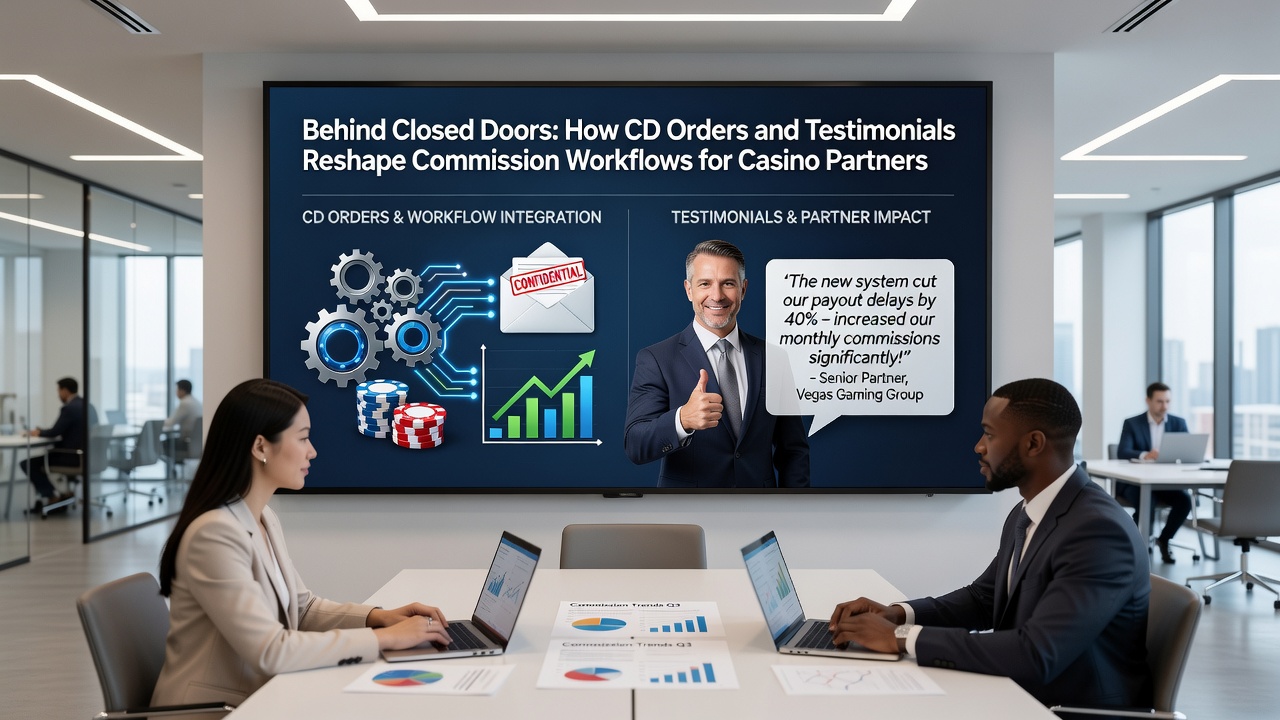
Testimonials enter the process as structured submissions that include player consent forms, screen captures of wins, and statements about site usability. Platforms route these submissions through the same validation layer used for CD orders, cross-referencing timestamps and account activity to confirm legitimacy. When a testimonial passes review, the workflow automatically attaches a performance tag to the associated CD orders, which can trigger bonus commission rates for the referring partner. According to figures released by the American Gaming Association, programs that incorporate testimonial validation see measurable shifts in how quickly commissions reach final approval stages.
Integration Points That Alter Payout Timelines
Commission workflows now pause at specific checkpoints where CD order data meets testimonial records. One checkpoint requires matching a minimum number of verified testimonials to a cluster of CD orders before releasing accelerated payments. Another checkpoint uses testimonial sentiment scores to adjust risk multipliers that can either increase or hold back portions of pending commissions. Partners report that these checkpoints, while adding steps, also create clearer audit trails that satisfy requirements from regulators such as the Malta Gaming Authority. In August 2026, several major operators updated their backend systems to shorten the interval between testimonial approval and commission release from fourteen days to seven days when all linked CD orders meet volume thresholds.
Examples from Partner Networks
Take one European operator that introduced a combined CD order and testimonial module in early 2025. Within six months the program recorded a 23 percent rise in affiliates reaching the top commission tier because verified testimonials unlocked incremental bonuses tied directly to deposit clusters. Another case from a North American platform shows how mismatched timestamps between a CD order and its linked testimonial triggered manual review, which delayed payment for three days yet ultimately protected both parties from compliance issues. These examples illustrate how the merged data streams create both opportunities and friction points that partners must navigate.
Technical Adjustments Behind the Scenes
Developers have modified API endpoints so that CD order creation events now trigger webhook calls to the testimonial database. The response includes a binary flag indicating whether supporting testimonials exist and a numeric score reflecting verification strength. Commission engines read these flags and recalculate payout percentages before the next billing cycle closes. Observers who have examined the updated schemas note that fields for consent timestamps and IP verification have been added to prevent duplicate submissions that previously inflated commission totals. Such changes reduce manual intervention while maintaining traceability required by licensing bodies.
Conclusion
CD orders and testimonials now operate as interconnected data streams that directly influence commission workflow timing, tier eligibility, and audit readiness for casino partners. The technical linkages between deposit records and verified player statements allow platforms to automate more steps while still meeting regulatory documentation standards. Partners who align their internal tracking with these updated processes gain clearer visibility into when and why commission amounts shift from month to month.