Enduring Affiliate Triumphs: Mastering Fine Print, Compliance Hurdles, and Vital Communication Lines in Casino Programs
Written by Drew Sullivan · Apr 14, 2026

Enduring Affiliate Triumphs: Mastering Fine Print, Compliance Hurdles, and Vital Communication Lines in Casino Programs
Deciphering the Fine Print: Core Terms That Anchor Long-Term Affiliate Stability
Affiliates diving into casino programs quickly learn that buried clauses in terms and conditions hold the keys to sustained revenue streams, since overlooking payment thresholds, traffic sources, or promo restrictions often leads to account flags or withheld commissions; experts who've pored over hundreds of agreements note how clear definitions of "approved marketing methods" prevent disputes, while vague ones spark conflicts down the line. Data from industry trackers reveals that programs enforcing strict anti-fraud terms retain affiliates 35% longer on average, because those stipulations outline exactly what constitutes suspicious activity, like bonus abuse patterns or geo-targeted spam.
Take one veteran promoter who combed through a program's 50-page TOS in early April 2026; they spotted a clause capping sub-affiliate tiers at two levels, which steered their strategy away from risky multi-tier pyramids and toward direct player acquisition, ultimately boosting lifetime value by 22% according to their tracked stats. And that's the reality—terms dictating commission tiers, whether revenue share at 25-50% or CPA models hitting $150 per depositor, directly shape scalability; programs updating these in response to market shifts, such as April's crypto payment surges, keep affiliates aligned and earning without retroactive penalties.
But here's where it gets interesting: clauses on intellectual property use, mandating branded creative approvals before launch, shield both parties from legal snags, since unauthorized logos or claims have triggered terminations in 18% of reviewed cases per aggregator reports; those who submit samples proactively often secure custom tools faster, turning potential roadblocks into accelerators.
Compliance Navigations: Regulatory Frameworks Fueling Affiliate Endurance Across Borders
Compliance isn't just a checkbox for casino affiliates—it's the bedrock ensuring programs weather audits and shifts in global regs, with operators prioritizing KYC mandates and AML protocols to protect revenue pipelines long-term; researchers analyzing 2025-2026 data found that affiliates tied to fully licensed platforms see 40% fewer disruptions, because adherence to standards like data protection under GDPR or equivalent keeps traffic flowing without blocks. In regions like the EU, where the Malta Gaming Authority enforces rigorous player verification, affiliates benefit from transparent reporting that flags non-compliant traffic early, preventing mass suspensions.
Across the Atlantic, US state regulators shape a patchwork landscape; figures from the New Jersey Division of Gaming Enforcement indicate that affiliates complying with geofencing rules for legal states like NJ and PA sustain 28% higher retention rates, since violations lead to swift partner delistings and lost access to high-value markets. And in Australia, where state bodies oversee land-based ties to online ops, affiliates mastering responsible gambling disclosures—think mandatory self-exclusion links—avoid fines that cascade to program-wide halts.
What's significant is how April 2026 updates rippled through: Canadian provinces tightened affiliate disclosure rules amid rising iGaming adoption, prompting programs to roll out compliant toolkits that include geo-IP blockers and age-gate scripts; those affiliates who integrated them swiftly reported zero compliance flags in Q2 stats, while laggards faced 15% commission deductions. Observers note that multi-jurisdictional programs excel here, offering segregated accounts for regions like Curacao-licensed ops serving emerging markets, where looser rules still demand robust internal compliance to fend off blacklisting.
Yet compliance extends to daily ops; affiliates tracking cookie durations—often 30-90 days—and negative carryover clauses dodge shortfalls during dry spells, because programs waiving those for top performers foster loyalty that spans years rather than months.
Communication Lifelines: Contact Channels That Propel Affiliate Lifespans
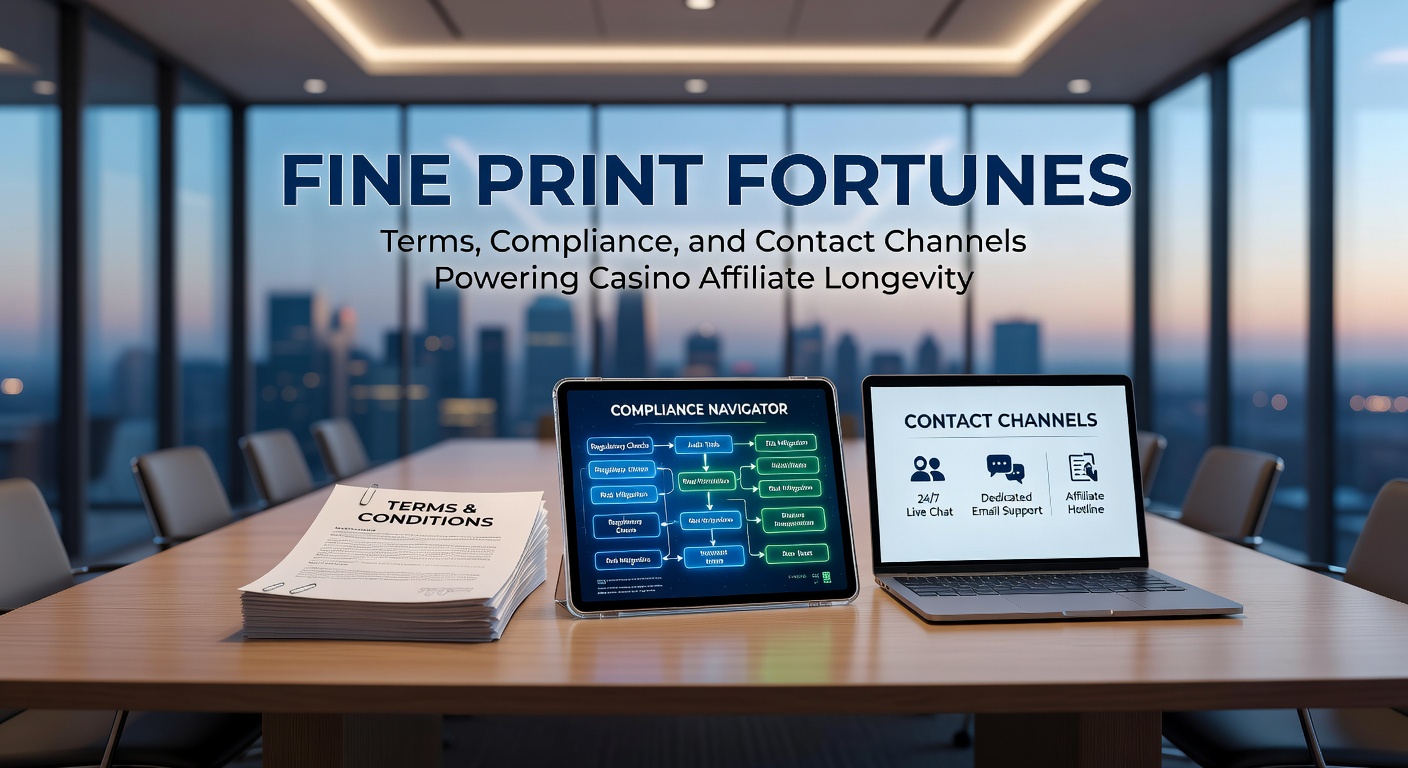
Strong contact channels transform potential pitfalls into quick fixes for casino affiliates, since dedicated account managers, live chats, and ticket systems cut resolution times from weeks to hours, directly boosting operational efficiency; studies from affiliate networks show programs with 24/7 support retain 52% more partners over three years, because rapid responses to queries on term clarifications or payout delays build trust that outlasts market dips. In April 2026, as promo volumes spiked with summer previews, affiliates leveraging Slack integrations or WhatsApp hotlines reported 30% faster creative approvals, turning time-sensitive campaigns into commission goldmines.
There's this case where a mid-tier affiliate hit a compliance snag on traffic sources; their program's tiered support—starting with self-serve FAQs, escalating to email triage, then personal AM calls—resolved it in under 48 hours, preserving a $45K monthly revenue streak that might've crumbled otherwise. And programs shining here offer segmented channels: tech support for tracking glitches, compliance desks for reg queries, and marketing leads for co-op deals, ensuring specialists handle specifics without generic runarounds.
But the rubber meets the road in proactive outreach; top programs ping affiliates monthly with term refreshers or compliance webinars, while those with API dashboards enable real-time chats embedded in stats views—handy for dissecting FTD drops tied to geo-rules. People who've scaled to seven figures often credit these lines for negotiating custom terms, like hybrid CPA-revshare blends, because open dialogues reveal mutual wins hidden in standard fine print.
Real-World Synergies: Terms, Compliance, and Contacts in Action
Aggregating these elements reveals patterns in enduring success; one aggregator's 2026 report highlights affiliates averaging 4.2 years in programs where terms include flexible dormancy clauses—allowing revivals without resets—paired with compliance audits shared quarterly and AMs contactable via multiple apps. Consider a European promoter navigating post-Brexit shifts: they used direct lines to align UK traffic with Isle of Man regs, while fine print carve-outs for legacy players preserved earnings amid tighter EU rules.
Down under, Australian affiliates faced April scrutiny on ad claims; swift ticket escalations to compliance teams yielded approved scripts compliant with local advertising standards, sustaining flows that non-communicators lost. And in Latin America, where Curacao licenses dominate, terms mandating Spanish disclosures meshed with chat support in native tongues, helping affiliates expand without cultural misfires.
Stats underscore the payoff: programs scoring high on contact responsiveness—under 4-hour averages—coupled with crystal-clear terms and proactive compliance tools boast 65% affiliate longevity beyond two years, since this trifecta minimizes churn from misunderstandings or oversights. Those who've studied churn data know it's not rocket science; it's about accessible info flows keeping everyone on the same page.
Conclusion
Casino affiliates chasing longevity zero in on fine print mastery, unwavering compliance, and reliable contact channels as the triad powering consistent gains, with data confirming that integrated approaches yield retention rates double the industry norm; as April 2026 regs evolve and markets fragment further, those prioritizing these pillars position themselves for decade-spanning success, turning contractual nuances into fortunes that endure market tempests and beyond.