Integrating Earnings Analytics and Resource Allocation in Affiliate Network Performance Tracking
Written by Drew Sullivan · Aug 25, 2026
Integrating Earnings Analytics and Resource Allocation in Affiliate Network Performance Tracking
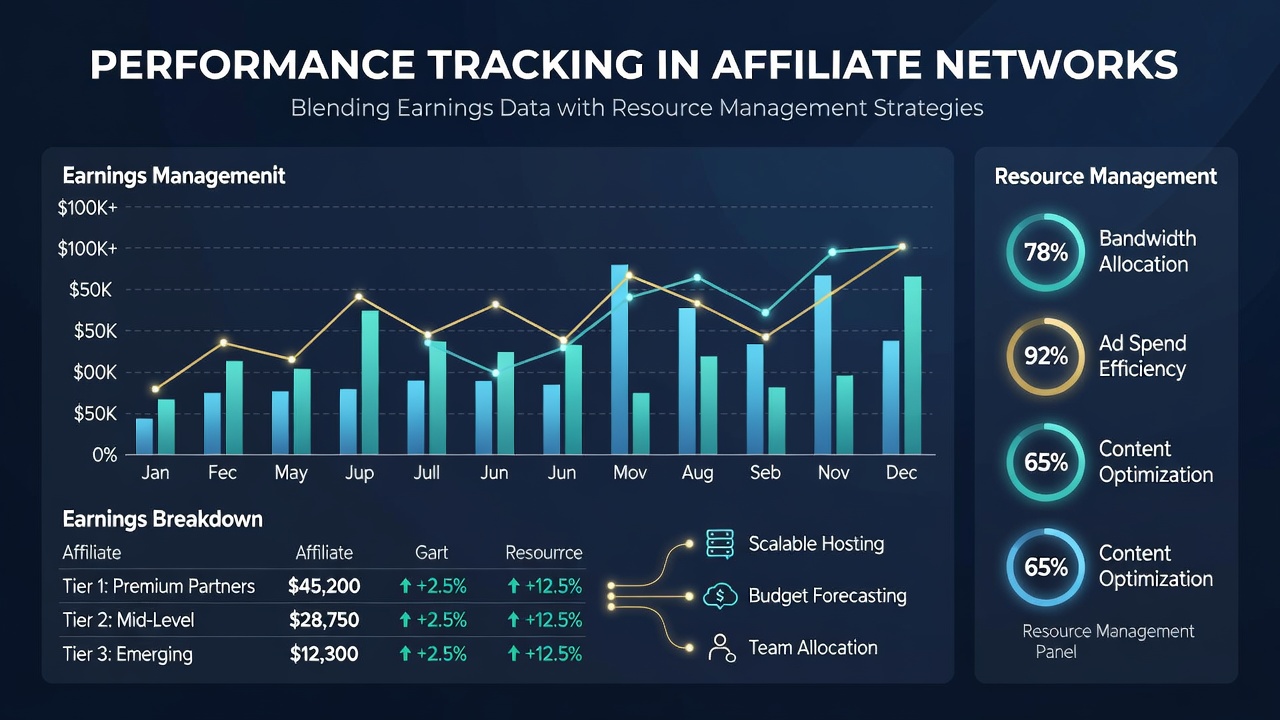
Affiliate networks rely on systematic performance tracking that merges earnings data with resource management approaches, allowing operators to align financial outcomes with operational inputs such as marketing budgets, platform tools, and staff allocation. Data from multiple industry reports shows that networks adopting combined metrics achieve clearer visibility into commission structures and payout cycles, particularly when monitoring real-time adjustments across campaigns.
Core Components of Earnings Data Integration
Earnings data forms the foundation, encompassing commission rates, conversion volumes, and player lifetime values collected through automated reporting systems. Observers note that networks process these figures alongside resource variables like ad spend and content production hours, creating unified dashboards that highlight correlations between investment levels and revenue generation. In practice, teams review aggregated datasets to identify patterns where higher resource deployment correlates with sustained earnings growth across different traffic sources.
Resource management strategies extend beyond simple budgeting to include time allocation for partner outreach and technology upgrades that support data accuracy. Studies conducted by research institutions indicate that networks in regions such as North America and Europe have refined these strategies by cross-referencing earnings reports with inventory levels of promotional assets. This method reduces waste when campaigns underperform, prompting reallocation toward higher-yield channels without disrupting ongoing operations.
Practical Applications Across Networks
One documented case involves networks that layer earnings analytics onto resource planning during seasonal peaks, such as major sporting events or promotional periods. Figures reveal that blending these elements enables predictive adjustments, where projected earnings guide decisions on scaling server capacity or expanding affiliate support teams. Australian regulatory bodies have published overviews showing similar approaches in licensed operations, emphasizing data-driven resource shifts that maintain compliance while supporting growth targets.

Networks also incorporate third-party verification tools to validate earnings data before integrating it with resource models, ensuring accuracy when external partners submit performance logs. This step proves essential because discrepancies in raw data can skew resource decisions, leading to overcommitment in underperforming segments. Researchers at academic centers focusing on digital marketing have examined these verification processes, finding that consistent cross-checks improve overall efficiency in multi-tier affiliate structures.
Regional Variations and Data Trends
Geographic differences influence how networks blend these elements. In Canadian markets, provincial oversight encourages detailed tracking that ties earnings directly to responsible resource distribution across player acquisition channels. Meanwhile, data compiled by European trade associations demonstrates that networks using integrated platforms report faster response times when reallocating budgets based on earnings shortfalls. These patterns emerged clearly in updates shared during August 2026 industry briefings, where participants highlighted software enhancements designed to automate resource rebalancing triggered by earnings thresholds.
Additional layers involve forecasting models that project future earnings against planned resource expenditures, incorporating variables such as regulatory changes and market saturation. Industry organizations note that networks applying these models experience fewer disruptions during transitions, since resource commitments remain tethered to verified performance indicators rather than isolated assumptions.
Conclusion
Performance tracking in affiliate networks continues to evolve through the deliberate combination of earnings data and resource management frameworks. This integration supports informed adjustments across operations, drawing from diverse regulatory and research sources that span multiple jurisdictions. Networks that maintain these blended approaches position themselves to respond effectively to shifting market conditions while preserving operational coherence.