Mapping Affiliate Pathways: Linking Account Oversight, Promotional Campaigns, and Resource Access for Optimized Commission Outcomes
Written by Drew Sullivan · Jul 21, 2026
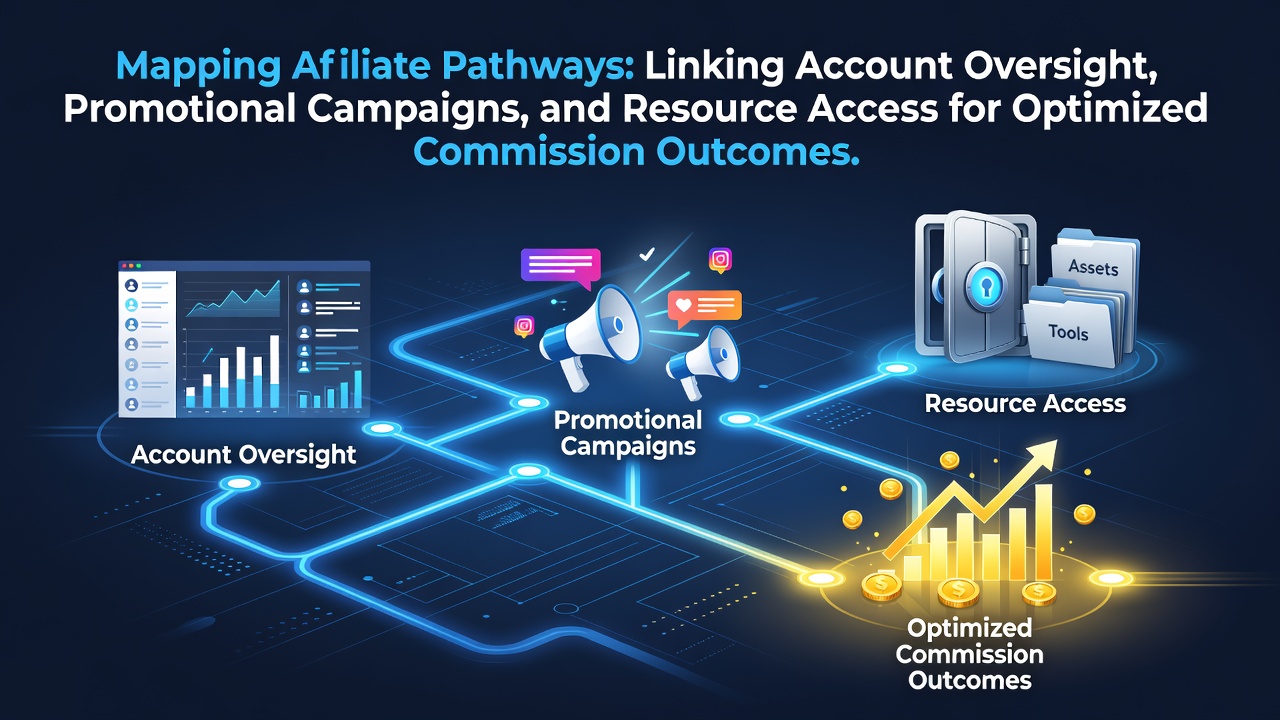
Mapping Connections in Affiliate Programs: Oversight, Campaigns, and Resources for Better Outcomes
Affiliate programs in the casino sector operate through interconnected systems where account oversight feeds directly into campaign execution and resource deployment. Data from these systems shows measurable improvements in commission structures when the three areas align without gaps. Observers note that tracking begins at the account level, where performance metrics establish baselines for subsequent promotional decisions. Account oversight encompasses dashboards that display earnings, traffic sources, and conversion rates in real time. These interfaces allow affiliates to identify which referral streams produce consistent results and which require adjustment. Reports generated through such oversight reveal patterns across multiple months, including seasonal fluctuations that affect player acquisition costs. In practice, affiliates who review these metrics weekly adjust their targeting parameters before campaigns launch, rather than after shortfalls appear in payout summaries. Promotional campaigns draw from the same data pools supplied by oversight tools. Campaign managers select creatives, landing pages, and player segments based on historical performance indicators rather than assumptions. When oversight highlights strong mobile traffic from specific regions, campaigns shift focus toward optimized banners and email sequences that match those patterns. This linkage reduces wasted spend on mismatched promotions and increases the volume of qualified referrals that convert into active players. Resource access forms the third link in the chain. Affiliates gain entry to marketing assets, tracking codes, and support documentation through centralized hubs. These resources update in tandem with oversight data, ensuring that new campaign materials reflect current compliance requirements and player preferences. For instance, when regional regulations change, updated terms and creative guidelines appear in the resource section within days, allowing campaigns to adapt without interruption. The integration becomes evident during performance reviews. Affiliates who cross-reference oversight reports with active campaign results and available resources identify bottlenecks faster than those who treat each area separately. One documented case involved an affiliate who noticed declining conversion rates in oversight data, traced the issue to outdated tracking links in the resource library, and corrected the campaigns within 48 hours, restoring commission levels to prior benchmarks. July 2026 data releases from industry trackers indicated that programs offering unified access across these three functions recorded average commission uplifts of 12 to 18 percent compared with fragmented setups. The figures came from aggregated reports compiled by multiple operators rather than single-platform estimates. Affiliates who maintained regular access to all three components also showed lower churn rates in their referral bases, as ongoing adjustments kept promotions aligned with player behavior shifts. External benchmarks support the same pattern. Research published by the American Gaming Association highlights how structured data sharing between account systems and marketing teams correlates with higher lifetime player values across operator networks. A separate analysis from the Canadian Gaming Association reached similar conclusions after examining affiliate cohorts over two calendar years, noting that resource updates delivered through oversight dashboards produced quicker campaign refinements. Operational flow typically follows a repeating sequence. Oversight identifies high-performing segments, campaigns incorporate those insights through targeted creatives, and resources supply the necessary assets to execute without delay. Disruptions occur when any single component lags, such as delayed resource uploads or incomplete oversight exports, which can extend the time between insight and action by several days. Training materials within resource hubs often emphasize this sequence through step-by-step walkthroughs. Affiliates learn to export oversight data into campaign planning templates and then verify that required assets remain current. Programs that automate parts of this handoff, such as auto-populating creative recommendations based on oversight trends, report reduced manual errors and faster iteration cycles. Security considerations also intersect with these pathways. Account oversight portals enforce multi-factor authentication and session monitoring, which protects both earnings data and access credentials used for campaign management. Resource downloads carry version controls that prevent use of superseded materials, maintaining consistency across live promotions. Overall, the measurable outcomes stem from treating oversight, campaigns, and resources as a single operational loop instead of isolated functions. Programs structured this way generate clearer attribution between specific actions and resulting commission amounts, which supports more precise forecasting for both affiliates and operators.
Affiliate programs in the casino sector operate through interconnected systems where account oversight feeds directly into campaign execution and resource deployment. Data from these systems shows measurable improvements in commission structures when the three areas align without gaps. Observers note that tracking begins at the account level, where performance metrics establish baselines for subsequent promotional decisions. Account oversight encompasses dashboards that display earnings, traffic sources, and conversion rates in real time. These interfaces allow affiliates to identify which referral streams produce consistent results and which require adjustment. Reports generated through such oversight reveal patterns across multiple months, including seasonal fluctuations that affect player acquisition costs. In practice, affiliates who review these metrics weekly adjust their targeting parameters before campaigns launch, rather than after shortfalls appear in payout summaries. Promotional campaigns draw from the same data pools supplied by oversight tools. Campaign managers select creatives, landing pages, and player segments based on historical performance indicators rather than assumptions. When oversight highlights strong mobile traffic from specific regions, campaigns shift focus toward optimized banners and email sequences that match those patterns. This linkage reduces wasted spend on mismatched promotions and increases the volume of qualified referrals that convert into active players. Resource access forms the third link in the chain. Affiliates gain entry to marketing assets, tracking codes, and support documentation through centralized hubs. These resources update in tandem with oversight data, ensuring that new campaign materials reflect current compliance requirements and player preferences. For instance, when regional regulations change, updated terms and creative guidelines appear in the resource section within days, allowing campaigns to adapt without interruption. The integration becomes evident during performance reviews. Affiliates who cross-reference oversight reports with active campaign results and available resources identify bottlenecks faster than those who treat each area separately. One documented case involved an affiliate who noticed declining conversion rates in oversight data, traced the issue to outdated tracking links in the resource library, and corrected the campaigns within 48 hours, restoring commission levels to prior benchmarks. July 2026 data releases from industry trackers indicated that programs offering unified access across these three functions recorded average commission uplifts of 12 to 18 percent compared with fragmented setups. The figures came from aggregated reports compiled by multiple operators rather than single-platform estimates. Affiliates who maintained regular access to all three components also showed lower churn rates in their referral bases, as ongoing adjustments kept promotions aligned with player behavior shifts. External benchmarks support the same pattern. Research published by the American Gaming Association highlights how structured data sharing between account systems and marketing teams correlates with higher lifetime player values across operator networks. A separate analysis from the Canadian Gaming Association reached similar conclusions after examining affiliate cohorts over two calendar years, noting that resource updates delivered through oversight dashboards produced quicker campaign refinements. Operational flow typically follows a repeating sequence. Oversight identifies high-performing segments, campaigns incorporate those insights through targeted creatives, and resources supply the necessary assets to execute without delay. Disruptions occur when any single component lags, such as delayed resource uploads or incomplete oversight exports, which can extend the time between insight and action by several days. Training materials within resource hubs often emphasize this sequence through step-by-step walkthroughs. Affiliates learn to export oversight data into campaign planning templates and then verify that required assets remain current. Programs that automate parts of this handoff, such as auto-populating creative recommendations based on oversight trends, report reduced manual errors and faster iteration cycles. Security considerations also intersect with these pathways. Account oversight portals enforce multi-factor authentication and session monitoring, which protects both earnings data and access credentials used for campaign management. Resource downloads carry version controls that prevent use of superseded materials, maintaining consistency across live promotions. Overall, the measurable outcomes stem from treating oversight, campaigns, and resources as a single operational loop instead of isolated functions. Programs structured this way generate clearer attribution between specific actions and resulting commission amounts, which supports more precise forecasting for both affiliates and operators.